
UNESCO Intangible Cultural Heritage
Durga Puja: Celebration of Culture, Art & Devotion
A walk through the festival, from Mahalaya to Vijaya Dashami.
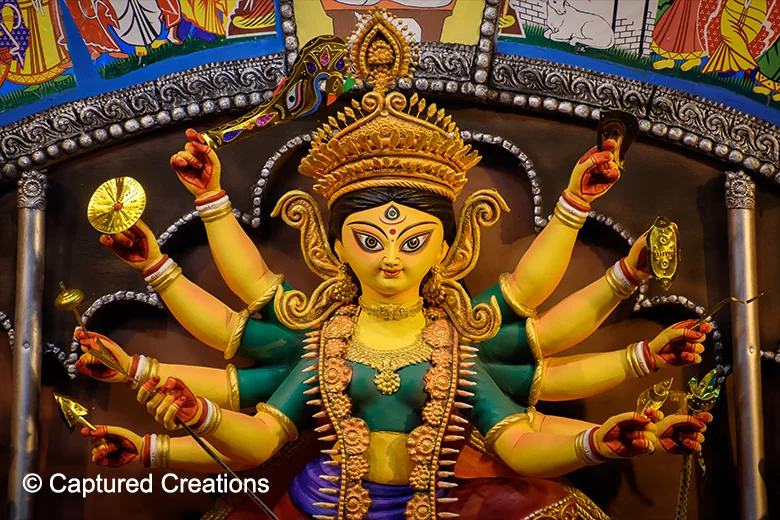
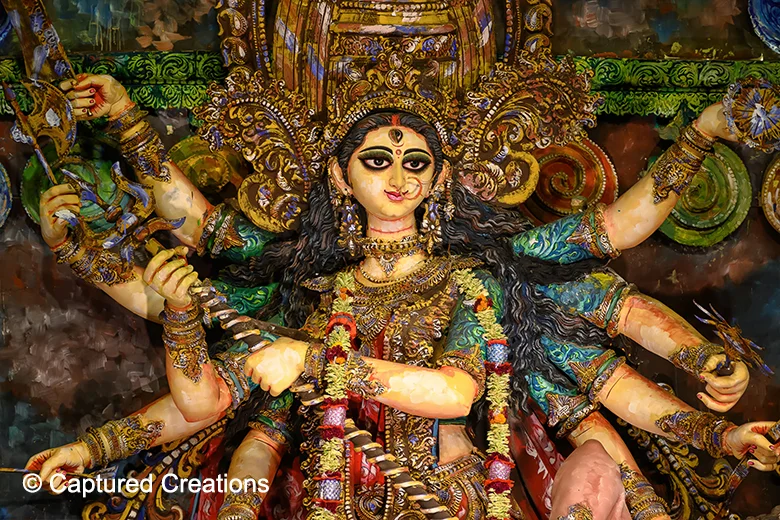
Durga Puja is a major festival that celebrates the victory of Goddess Durga over the demon Mahishasura. This vibrant festival begins after Mahalaya and usually lasts for ten days, with the main celebrations taking place in the last five days, starting from Maha Shashthi and ending on Vijaya Dashami/Dussehra. The festival is most famous in West Bengal, especially in Kolkata, but is also celebrated in other parts of the World. Durga Puja has great cultural and economic importance, as it brings people together through art, music, dance, and food while also boosting local businesses and tourism.
In 2021, UNESCO recognized Durga Puja as an Intangible Cultural Heritage, making it even more special. This recognition increased its global importance, attracting more tourists and promoting Bengali culture worldwide. With this honor, Durga Puja continues to grow, connecting more people to its rich traditions and joyful celebrations.
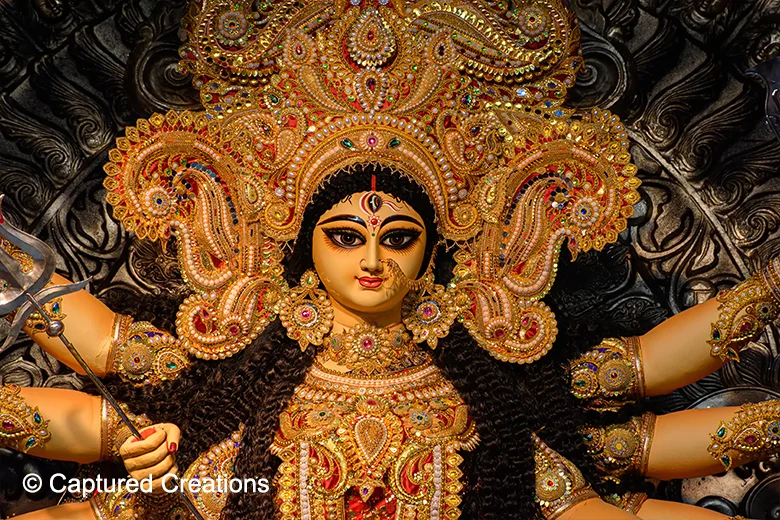
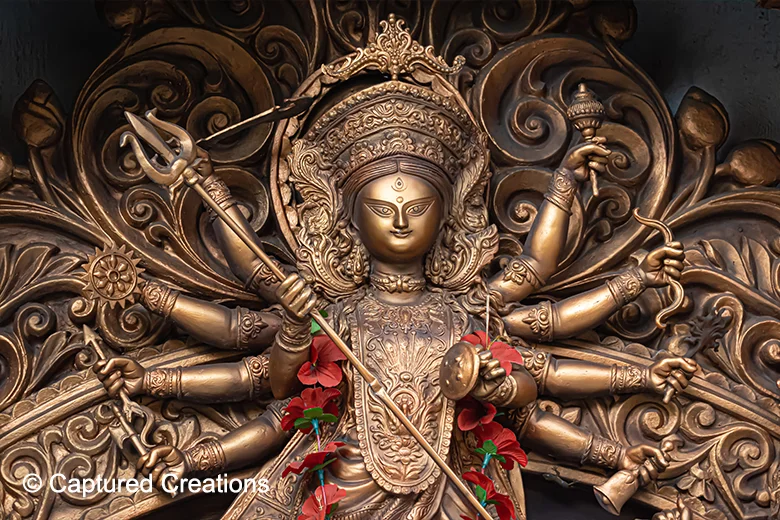
Let’s explore the various facets of Durga Puja, from its historical beginnings to the unique rituals and customs that make it special.
01 — History
History of Durga Puja:
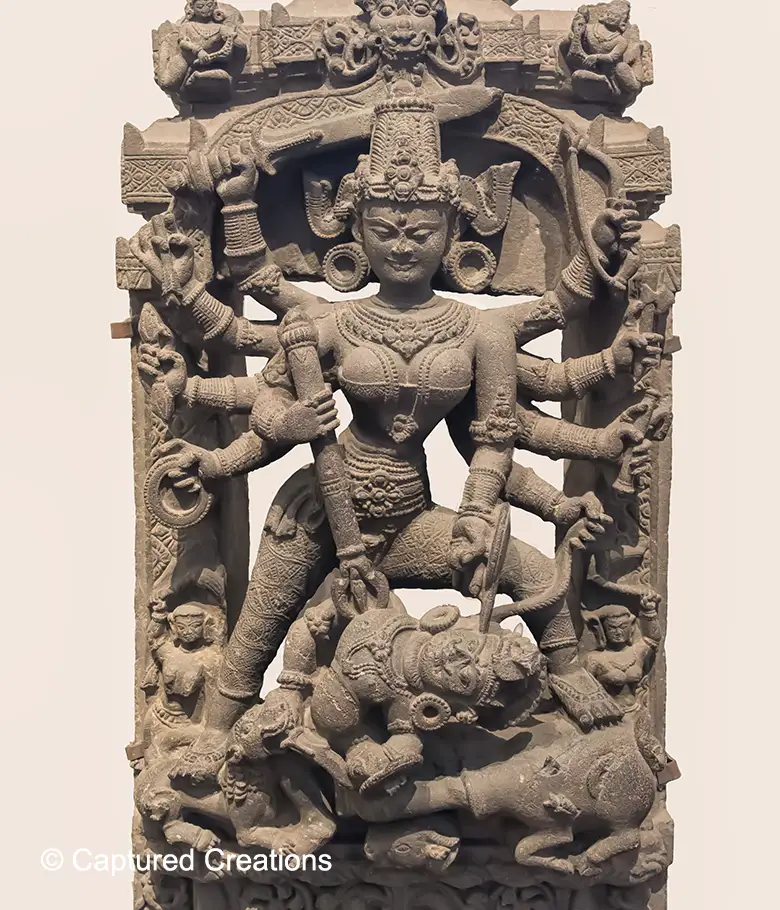
Durga Puja has a long and interesting story that shows how our society and culture have changed over time. It is believed that the tradition of worshipping Goddess Durga in Autumn, known as “Akal Bodhan”, was initiated by Lord Rama to seek her blessings before his battle with Ravana.
In the past, Durga Puja became very popular in the late 1500s when wealthy landowners in Bengal started organizing big and beautiful celebrations. Slowly, it changed from a special family tradition to a festival for everyone, called “Sarbojonin Durga Puja,” where people from all backgrounds join together to celebrate.
02 — Kumartuli
Kumartuli: Artistic Heart of Durga Puja
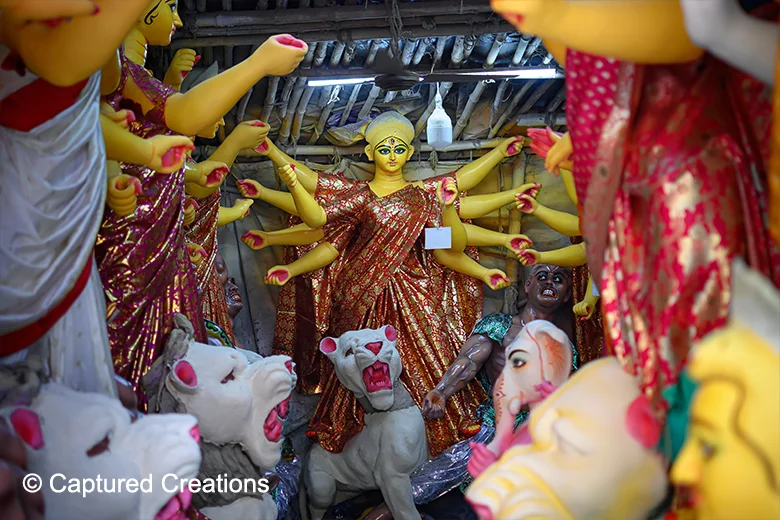
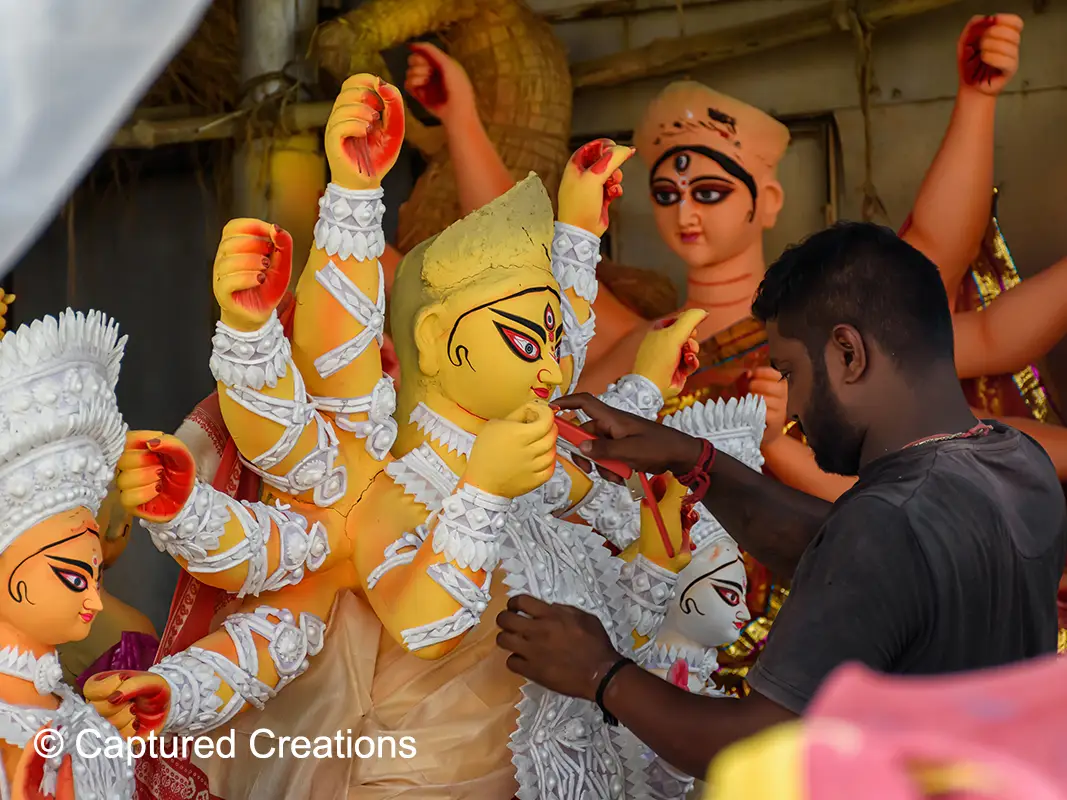
Kumartuli, a renowned locality in the heart of North Kolkata, stands as an iconic centre for Durga Puja. This is where Durga Puja takes shape, as skilled artisans work tirelessly to craft the idols. They create beautiful idols that travel far and wide, from local pandals to international celebrations. Walking through Kumartuli feels like stepping into a living dream where tradition, devotion, and artistry breathe together.
03 — Agomoni
Agomoni: Arrival of Goddess Durga
The spirit of Durga Puja begins with Agomoni, which translates to “welcome.” These are devotional songs and rituals that mark the Goddess’s arrival. The songs often recount the divine journey of Durga from her heavenly abode to her earthly home. Agomoni photoshoots have also become a popular tradition, capturing the anticipation of the festival through cultural themes.

04 — Mahalaya
Mahalaya
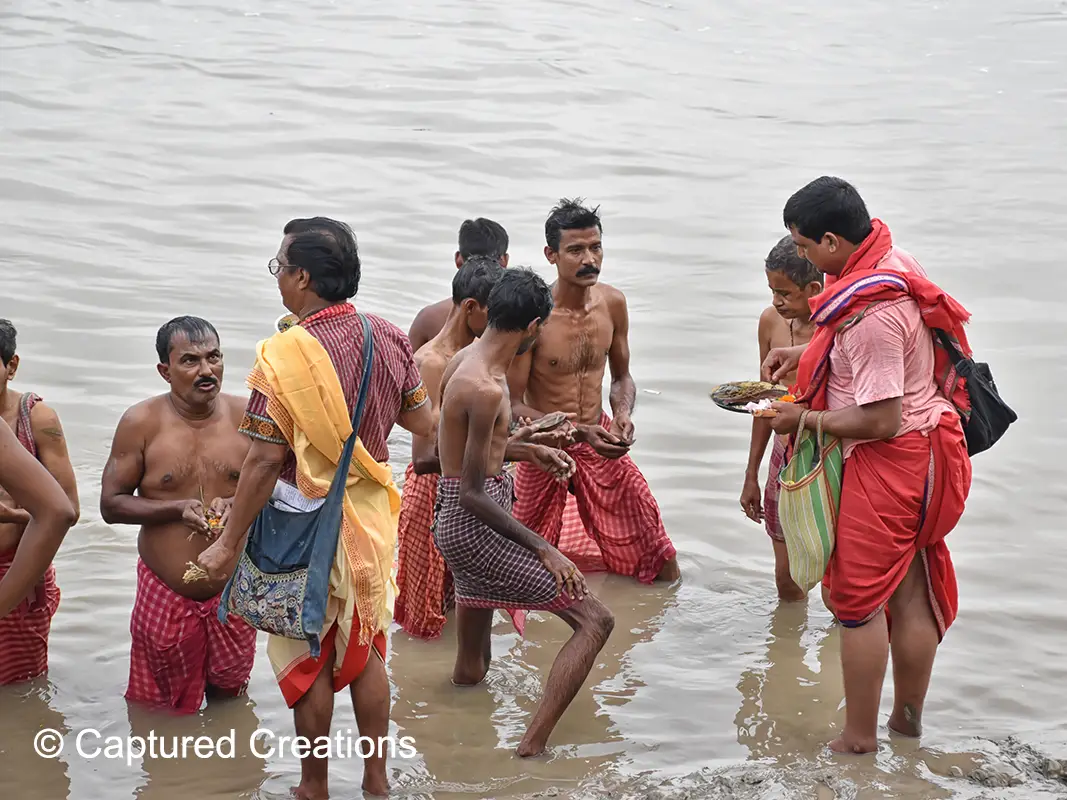
Mahalaya marks the start of the Durga Puja festival in India, celebrated seven days before the main festivities. It’s a day when Hindus remember and pay respects to their deceased ancestors, a ritual called Tarpan. People wake up early to listen to the Mahishasuramardini musical composition, a recitation of hymns and songs that narrate the story of Goddess Durga’s descent to earth to defeat the demon Mahishasura. This day signifies the end of Pitri Paksha (a 16-day period of ancestral rites) and the beginning of Devi Paksha, which celebrates the goddess.


05 — Pandal Hopping
Pandal Hopping:
Where Art and Devotion Meet
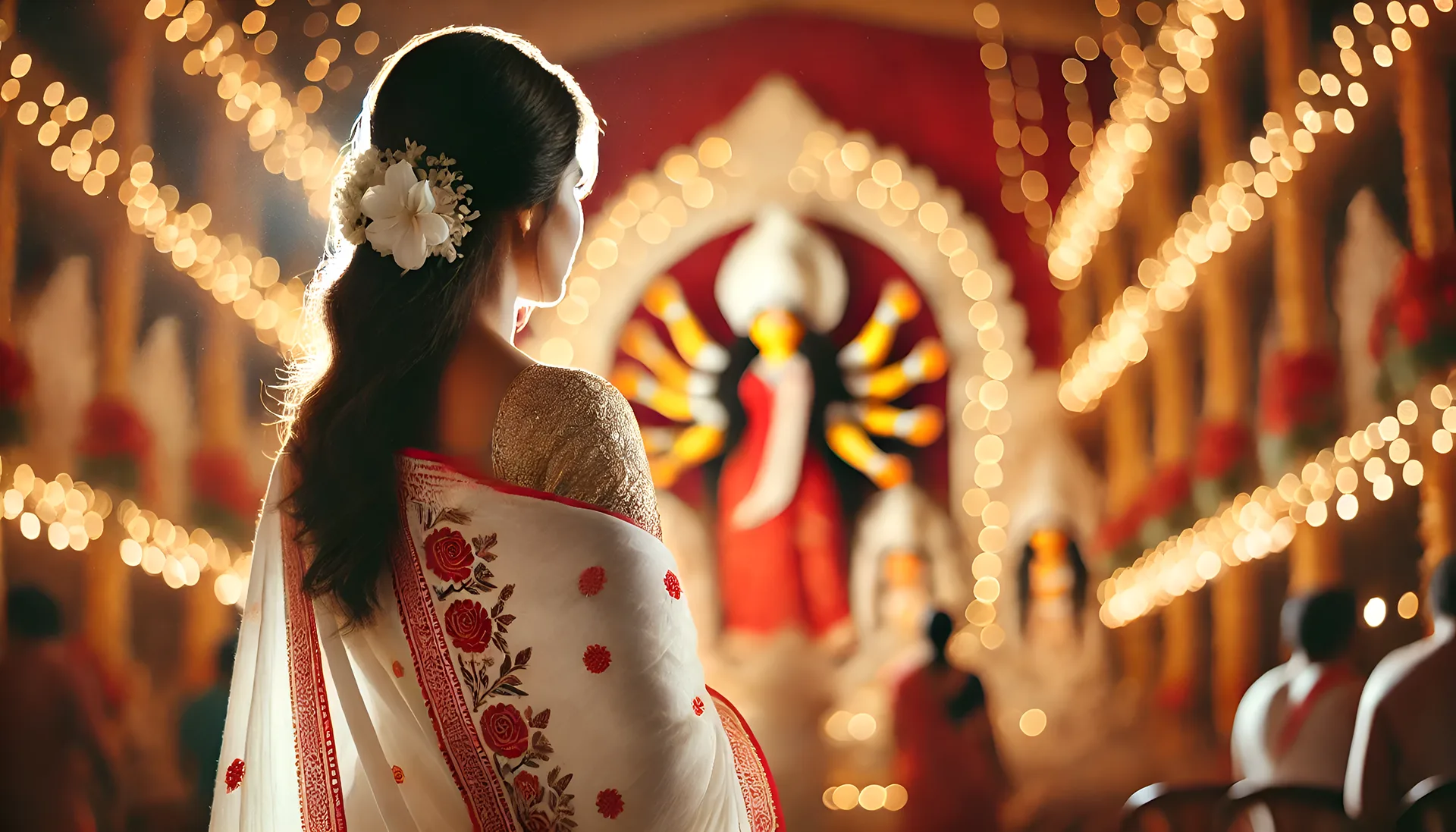
One of the most exciting aspects of Durga Puja is pandal hopping. These beautifully crafted temporary structures not only house the goddess but also showcase incredible artistic themes. From stunning replicas of famous landmarks to mythological scenes, each pandal is beautifully decorated with lights and handcrafted artwork. The streets shine with colourful lights, drawing huge crowds in festive attire. In Kolkata, crowds begin gathering at pandals as early as Chaturthi. Whether by bus, auto, or Kolkata Metro, getting around is easy, making the experience even more exciting.
06 — Sindoor Khela
Sindoor Khela:
Sindoor Khela is a jubilant ritual that marks the end of the Durga Puja festival on Vijaya Dashami. On this day, married Bengali women bid farewell to Goddess Durga by smearing sindoor on her feet and forehead. They then smear sindoor on each other, often playfully, symbolizing good fortune, marital bliss, and fertility. As part of the festivities, they also offer sweets to the idol and then share them with one another, spreading joy and goodwill.


Quick answers
Durga Puja, in short
What does Durga Puja celebrate?
Durga Puja is a major festival that celebrates the victory of Goddess Durga over the demon Mahishasura.
How long does Durga Puja last?
The festival begins after Mahalaya and usually lasts for ten days, with the main celebrations taking place in the last five days, starting from Maha Shashthi and ending on Vijaya Dashami/Dussehra.
Why is Durga Puja a UNESCO heritage?
In 2021, UNESCO recognized Durga Puja as an Intangible Cultural Heritage. The recognition increased its global importance, attracting more tourists and promoting Bengali culture worldwide.
What is Mahalaya?
Mahalaya marks the start of the Durga Puja festival in India, celebrated seven days before the main festivities. It is a day when Hindus remember and pay respects to their deceased ancestors, a ritual called Tarpan.
Where are the Durga idols made?
Kumartuli, a renowned locality in the heart of North Kolkata, is where the idols are crafted by skilled artisans, from local pandals to international celebrations.
What is Sindoor Khela?
Sindoor Khela is a jubilant ritual that marks the end of the Durga Puja festival on Vijaya Dashami, when married Bengali women bid farewell to Goddess Durga by smearing sindoor on her feet and forehead, and then on each other.